November 3, 2026
ADA Mobile Toilet Rental: Just How Accessibility Applies Beyond Permanent Facilities
By @juliusraxs693
When individuals think of ADA compliance, they typically envision buildings, not temporary setups. They think of office washrooms, dining establishment entryways, school passages, and medical centers. Mobile cleanliness frequently rests outside that psychological map, as if mobility and access matter much less due to the fact that the framework is short-term. In practice, that is specifically where issues begin.
A short-term toilet can still develop a very real barrier. If an individual reaches a public event, an area event, a roadside work area available to the general public, or any type of various other website using rented hygiene systems, the reality that the toilet is mobile does not eliminate the need for gain access to. The Americans with Disabilities Act does not stop at long-term wall surfaces and plumbing. It gets to right into the functional realities of exactly how people move via public areas, including the locations that only exist for a day, a week, or a season.
That is why ADA mobile bathroom service is not a courtesy item or an optional upgrade for appearance. It belongs to making a website useful by real individuals, several of whom require even more area, a stable strategy, compliant clearances, and clear recognition. The legal standard that matters right here is the 2010 ADA Specifications for Accessible Layout, as used by the Division of Justice and interpreted by the Accessibility Board. For portable devices offering the public, availability is not suspended just because the washroom arrived on a trailer.
Temporary does not indicate exempt
This is the point that surprises numerous event coordinators and some site supervisors. They presume ease of access guidelines soften when facilities are brief term. They may be careful concerning parking, entry routes, and seating, then treat toilet leasings as a different, totally logistical issue. Somebody orders a bank of units based on crowd matter, spending plan, and pumping timetable, and only later asks whether one must be "ADA."
That sequence obtains the issue backward.
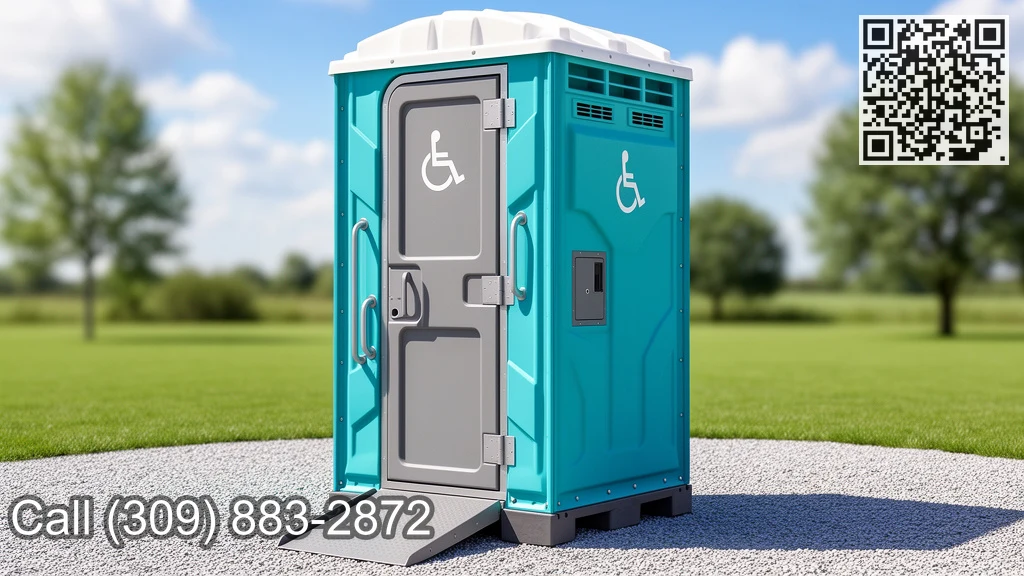
Portable toilets utilized in public setups still have to be thought about with the very same accessibility lens applied somewhere else. The Accessibility Board has been clear that, for collections of mobile single-user commode systems, at the very least 5 percent of the systems in each collection should come, which this uses even at momentary occasions. That one sentence brings even more weight than many individuals realize.
It indicates accessibility is not satisfied by claiming, "There is one obtainable system somewhere on the premises." It likewise means the response is not just to lease an extra-large device and hope that takes care of it. The scoping regulation applies to each cluster. If devices are distributed across a site, each organizing demands to be assessed on its own.
This matters in the real world due to the fact that mobile washrooms are typically expanded for comfort. A fairground may have a little bank near food vendors, one more near vehicle parking, and one more near an efficiency location. A sports occasion might do the very same. If availability exists only in one much edge, a person with a wheelchair special needs may still face a long, irregular, or impractical trip just to utilize the bathroom. The common addresses that by connecting accessibility to the cluster itself, not simply the general event inventory.
What an available portable system actually has to do
There is an usual misconception in the rental market that an ADA available portable washroom is just a bigger cabin with a wider door. Dimension helps, yet dimension alone is not compliance. The unit needs to satisfy the appropriate toilet-room technical needs. In ordinary terms, that means the interior and entrance have to support real use, not just visual similarity to accessibility.
The confirmed government assistance points to numerous technical areas that matter. The device requires the called for clearances for fixtures, sufficient turning room, appropriate door navigating clearances, and appropriate grab bar and water wardrobe clearance regulations. It likewise has to be related to the International Icon of Accessibility. Beyond the system itself, there must be an easily accessible course and easily accessible entry, and if ramps or landings are required, they have to follow ADA technical needs as well.
That more comprehensive framework is necessary since numerous accessibility failings happen outside the unit. I have actually seen sites where the available portable commode was certainly supplied, clearly marked, and literally larger than the others, yet positioned at the end of a sloppy incline, behind a visual lip, or on unsteady ground that made method hard or difficult. Theoretically, somebody leased the appropriate product. In method, the restroom was not accessible.
That is why a certified available portable commode is never ever just a box to look at the rental order. Placement, course, quality modifications, and entry conditions all matter.
The course to the bathroom belongs to the bathroom experience
A lot of availability problems turn up prior to anyone reaches the door. For a person making use of a mobility device, walker, cane, or other flexibility aid, the course to the bathroom can be the making a decision variable between independent use and total exclusion. The ADA structure identifies that. An ada certified portable bathroom is not truly available if the route to it is blocked or unusable.
At short-lived websites, this is where planning usually requires the most focus. Occasion premises and outside places are typically imperfect by nature. Surfaces may be yard, compacted dust, gravel, or sidewalk in mixed condition. Portable units may be organized where the vehicle can conveniently put them as opposed to where individuals can conveniently reach them. If the only obtainable unit is set on a spot of soft ground after rain, accessibility might disappear within hours.
The regulations do not invite improvisation here. If ramps or landings are needed, those components need to abide too. That matters because individuals sometimes think a loose sheet of plywood or an impromptu transition addresses the issue. It may resolve a delivery issue, but it does not automatically create an obtainable entrance.
The practical lesson is basic. If you are setting up ada mobile bathroom service, the website check out matters nearly as long as the tools choice. The washroom device, the course, the entryway, and the bordering setup requirement to work together.
Why "one accessible device someplace" can still drop short
People typically talk loosely and say they need "an ADA porta potty," singular, as if the issue is solved as soon as that device shows up on the billing. However the scoping rule for collections transforms the computation. At the very least 5 percent of units in each collection should be accessible.
For little setups, that commonly translates to one available system in a collection. For larger banks, it may still be one, relying on complete matter, but the key point is that you can not deal with an entire venue as one abstract total if the bathrooms are literally arranged in different clusters.
This is just one of those conformity information that seems management till you think of making use of the website yourself. Image coming to a jampacked occasion, car parking near one entry, and finding a nearby collection of typical systems while the only ada certified easily accessible mobile toilets are far throughout the grounds. A person without a mobility impairment may see that as bothersome. A person with a wheelchair disability might locate it tiring, dangerous, or simply impossible.
Accessibility is not just about whether a function exists someplace. It has to do with whether that attribute is meaningfully readily available where individuals require it.
Identification matters more than people think
An available system must be related to the International Icon of Availability. That can sound like a little management information, however it does practical work with the ground.
At a busy site, people require to locate the appropriate restroom rapidly. A person taking care of discomfort, tiredness, necessity, or restricted movement ought to not have to check every device straight to figure out which one is meant as the accessible option. Clear recognition reduces complication and assists staff direct visitors properly. It also signals, at the very least at a glimpse, that availability was considered rather than included as an afterthought.
This is especially beneficial at larger public events where volunteers or short-term team may not understand the website format well. If a visitor asks where the ada portable bathroom is located, noticeable noting allows an uncomplicated answer.
The exception individuals find out about, and frequently misapply
There is one location where complication often tends to spread quickly: building and construction websites. Some individuals have actually listened to that portable commode accessibility rules do not use at construction locations and then lug that assumption right into every rental conversation. That is also broad.
The appropriate distinction in the verified context is narrow. The ADA criteria acknowledged an exemption in the earlier 1991 scoping for portable toilets at construction sites used solely by construction employees. That is not the like saying all portable devices at all construction-related areas are excluded, and it is not a blanket pass for public-facing short-lived facilities.
This issues because numerous websites blur categories. A task website may have devices reserved just for employees, or it might have centers planned for public communication also. General portable bathroom leasings offering the public stay based on the accessible-unit demand. If there is any public-facing use, it is risky to think the building context eliminates accessibility obligations.
That is just one of those locations where careful judgment issues. Individuals enter into trouble when they obtain a half-remembered exemption and use it far beyond its real scope.
Rental decisions that form conformity prior to delivery day
A great mobile hygiene plan usually starts with straightforward questions, asked early enough that the answers can transform the layout. By the time vehicles are aligned and fence is set up, accessibility blunders become pricey and awkward.
Here are the inquiries that usually boost the outcome:
- How numerous different toilet clusters will certainly the website have?
- Which individuals are anticipated at each collection, consisting of participants of the public?
- Is there an accessible path per accessible unit from the bordering occasion or facility area?
- Will the placement surface area and entry problem remain useful if climate changes?
- Is the obtainable unit clearly identified and simple for personnel and visitors to locate?
That short list does not change lawful review or site-specific planning, but it catches one of the most usual blind spots. It likewise changes the discussion far from product tags and toward actual usability.
The language around these leasings can conceal the actual issue
People usage many search terms and market phrases when seeking systems. They may request for an ada handicap accessible portable washroom, an ada certified mobile bathroom, ada-compliant portable washrooms, or an ada available mobile bathroom. The phrasing differs, but the underlying concern coincides: can a person with a disability use this restroom separately and with dignity in the setting where it is placed?
That is why I tend to be careful about marketing language. An item summary can suggest conformity without clarifying whether the full setup, consisting of route and entry, has actually been taken into consideration. A system might be marketed as an ada mobile bathroom, however the website plan still establishes whether it works as one.
This is not resentment. It is just experience. In short-lived atmospheres, gain access to succeeds or stops working through information. A couple of feet of bad placement can undo a properly rented out device. A missing icon can make the restroom difficult to find. A collection circulation choice can leave one part of a location efficiently inaccessible even when the total system count appears adequate.
Accessibility is not a luxury feature
There is still a propensity in some planning conversations to mount accessible portable restrooms as a costs add-on, the means somebody might go over upgraded coatings or extra handwashing stations. That mounting misses the point.
For a person that needs the additional area, transforming area, maneuvering clearance, certified entry, or fixture design, the obtainable unit is not an ease. It is the toilet. Without it, there may be no useful option at all.
That is where an empathetic approach changes the high quality of planning. As opposed to asking, "Do we truly require one?" the much better question is, "Can every visitor or customer actually utilize the centers we are offering?" That seems refined, yet it changes decisions about quantity, placement, signs, and timing.
It likewise transforms just how teams think about issues. When access is missing out on, the issue is not that a person is being tough. The trouble is that the basic sanitation strategy excluded them.
Temporary occasions are not outside the bigger conformity culture
Accessibility enforcement and compliance task do not move in a straight line, yet the wider instructions is distinct. The ADA remains energetic throughout markets, and the compliance environment has actually remained to evolve, consisting of in digital accessibility for state and city government entities. Although internet and mobile rules are a various concern from portable sanitation, they reflect the same underlying fact: access obligations are not diminishing right into obscurity. If anything, companies are being advised that ADA compliance reaches throughout the full individual experience.
That matters because mobile bathroom choices are frequently made in operational silos. The event group manages rentals. The facilities team deals with routes. The lawful group examines contracts. The interactions team deals with public info. Access can slide with those voids unless someone treats it as a common responsibility.
The functional takeaway is not panic. It is attention. A site does not need grand language concerning inclusion to obtain this right. It requires careful planning and a determination to think beyond the delivery ticket.
Where coordinators and website managers most often go wrong
Most blunders are not dramatic. They are average oversights that accumulate.
Sometimes the available unit count is based on the total order, while the real website uses numerous collections. Sometimes the best device is rented out, but a poor route makes it pointless. Occasionally the unit is put in a place that is silent for servicing yet tough for participants to reach. In some cases no one verifies whether the system is identified properly. Occasionally employee just do not recognize where the obtainable bathroom is.
These are manageable issues, but just if they are dealt with as genuine planning problems as opposed to minor information to solve after setup.
A beneficial mental shift is to treat ada portable commode requirements as part of site layout, not simply rental purchase. As soon as you do that, the decisions end up being more coherent. You quit asking only how many systems fit the crowd and start asking exactly how individuals with different flexibility requirements will in fact move with the space.
What a much better setup looks like in practice
An excellent configuration is rarely fancy. It normally looks straightforward since a person made great decisions early.
The accessible device is consisted of in the right cluster matter. It is plainly marked. The path to it is considered beforehand. If a ramp or landing is needed, that need is identified prior to the unit shows up. The surrounding location is picked for stable, useful accessibility, not just vehicle ease. Personnel understand where the easily accessible device is, and the placement still makes sense if the site gets busy or weather condition shifts.
None of that is made complex in theory. The challenge is that short-term centers invite faster ways. Long-term buildings are required to confront gain access to in drawings, allows, and assessments. Portable bathrooms can really feel casual by comparison, that makes it easier for ease of access to be managed casually. However to https://alexiseapr581.dovetailscope.com/posts/what-makes-an-ada-compliant-portable-toilet-rental-accessible the individual that needs the restroom, the experience is no less real due to the fact that the walls are temporary.
A final practical criterion for evaluating any kind of mobile washroom plan
When I look at a temporary washroom configuration, I return to a brief collection of practical tests. Can the person find it? Can they reach it? Can they enter it? Can they maneuver inside it? Can they use it with the intended clearances and sustains? If the sincere solution to any one of those is no, the setup is refraining what an ada compliant mobile commode setup is meant to do.
That is the heart of the problem. An ada-compliant portable bathroom is not simply a larger rental unit. It becomes part of an accessible sanitation system that includes scoping, identification, route, entry, and functional interior space. The government criteria do not stop at irreversible buildings, and neither ought to our planning.
For organizers, contractors, municipalities, location drivers, and any person organizing ada portable bathroom leasing, the obligation is simple also if the information need care. Short-term centers still need to be accessible. Public-facing mobile toilet collections still require the called for easily accessible devices. The obtainable systems still need proper identification, route, entrance, and technical toilet-room attributes. And minority exemptions that exist should be applied directly, not casually.
Accessibility beyond permanent centers is still accessibility. Individuals do not stop needing self-respect, space, and safe usage even if the bathroom arrived on a truck.
 Ask ChatGPT
 Ask Grok
 Ask Perplexity
 Ask Claude
 Ask Google AI
 Ask You
❧